

The Youth Olympic Games Dakar 2026, taking place from October 31 to November 13 in Senegal, marks the inaugural Olympic event hosted on the African continent. This global gathering features approximately 2,700 young athletes competing across 25 disciplines.
As a key Worldwide Olympic and Paralympic Partner, Samsung Electronics is significantly contributing to the Games through its Galaxy technology. This includes initiatives like the Victory Selfie, broadcast integrations, and the Samsung Open Station, an interactive experience hub within the Youth Olympic Village. Samsung’s involvement in the Youth Olympic Games dates back to its inception in Singapore in 2010, but its role at Dakar 2026 transcends technological support by fostering the personal development of young athletes.
Enhancing Athlete Development
For competitors at Dakar 2026, reaching the Olympic platform is the culmination of extensive dedication. However, the journey imparts valuable lessons in resilience, overcoming challenges, and recognizing broader values beyond mere performance outcomes.
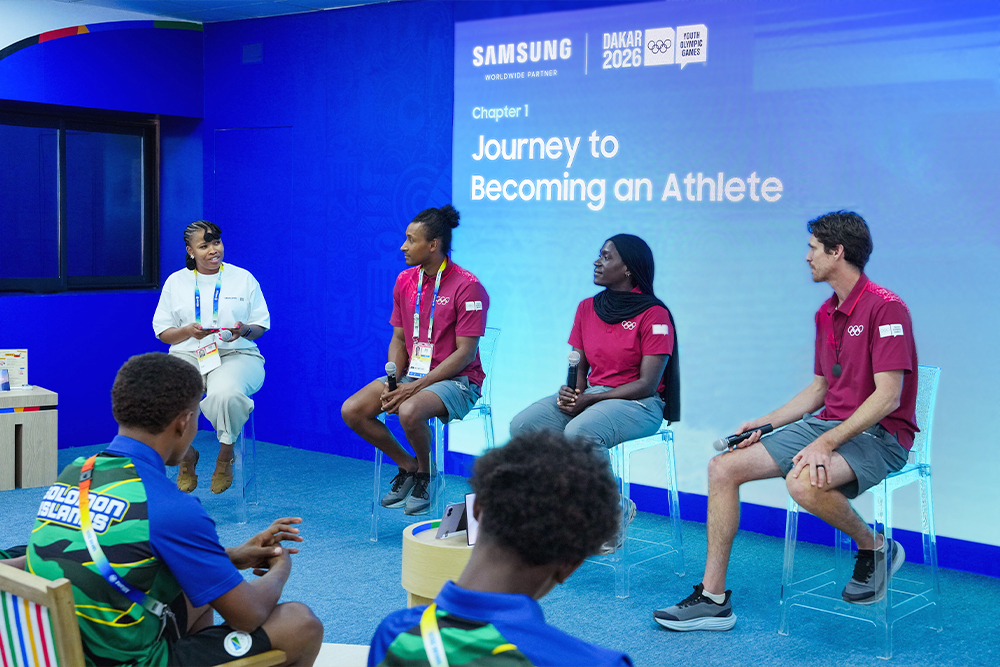
On November 3, Samsung orchestrated a mentoring session titled “Beyond the Medal: Your Journey Shapes What Comes Next” at the Samsung Open Station. The session gathered past Olympians to inspire and guide young athletes, aligning with Samsung’s commitment to openness and growth through its Olympic partnerships.
The session featured IOC Athlete Role Models including Senegalese canoe slalom Olympian Jean-Pierre Bourhis, Ugandan swimmer Jamila Lunkuse, and New Zealand tennis bronze medalist Marcus Daniell. Moderated by Lefa Makgato, CSR Manager at Samsung Electronics Africa, the discussion engaged 28 young athletes from 12 nations, focusing on navigating life beyond competitive sports.
Pathways to Success: Insights from Olympians
Jean-Pierre Bourhis, who participated in Rio 2016 and Tokyo 2020, reflected on the inspiration he drew from Togo’s Benjamin Boukpeti, a bronze medalist at Beijing 2008. Bourhis emphasized the importance of paving the way for future African athletes through his experiences.
Jamila Lunkuse, who entered the Olympic stage at 15, shared how her initial involvement in swimming was fueled by camaraderie rather than competitive ambition, which ultimately cultivated her passion for the sport.
Marcus Daniell detailed his pivotal decision to prioritize tennis over football at age 14, a choice that demanded full commitment and eventually resulted in an Olympic medal at Tokyo 2020, ending a 109-year medal drought for New Zealand tennis.
Overcoming Barriers: Lessons from Challenges
The mentors also delved into how they navigated significant obstacles. Bourhis, facing a scarcity of training facilities in Senegal, established his training base in France while maintaining a full-time engineering job. He advocated viewing limitations as solvable problems rather than insurmountable barriers.
Lunkuse recounted her struggles with anxiety before the Rio 2016 Games, overcoming it by taking necessary breaks to reassess her priorities and seek assistance.
Daniell discussed a severe knee injury in 2022 that sidelined him for nearly two years, highlighting the importance of having aspirations beyond personal achievements to cope with setbacks.
Leveraging Sports Experience for Future Opportunities
In their post-competitive careers, the athletes have continued to apply their sports-derived insights. Bourhis is developing a canoeing infrastructure in Senegal, while Lunkuse supports youth as a coach and through her role on the World Aquatics Athletes’ Committee.
Daniell, advocating for goals beyond personal accolades, founded High Impact Athletes, a nonprofit linking athletes with charitable initiatives, also serving on the IOC Athletes’ Commission.
Facilitating Future Generations
Lefa Makgato closed the session by sharing her personal journey from discovering technology at a Samsung Solar Powered Internet School to leading CSR efforts across Africa. She emphasized the transformative potential of technology and education, encouraging young athletes to remain open to possibilities and take control of their futures.
The Youth Olympic Games have incorporated IOC Athlete Role Models since 2010, selecting them to provide guidance on career management and overcoming adversities, thereby nurturing the next wave of athletes.